

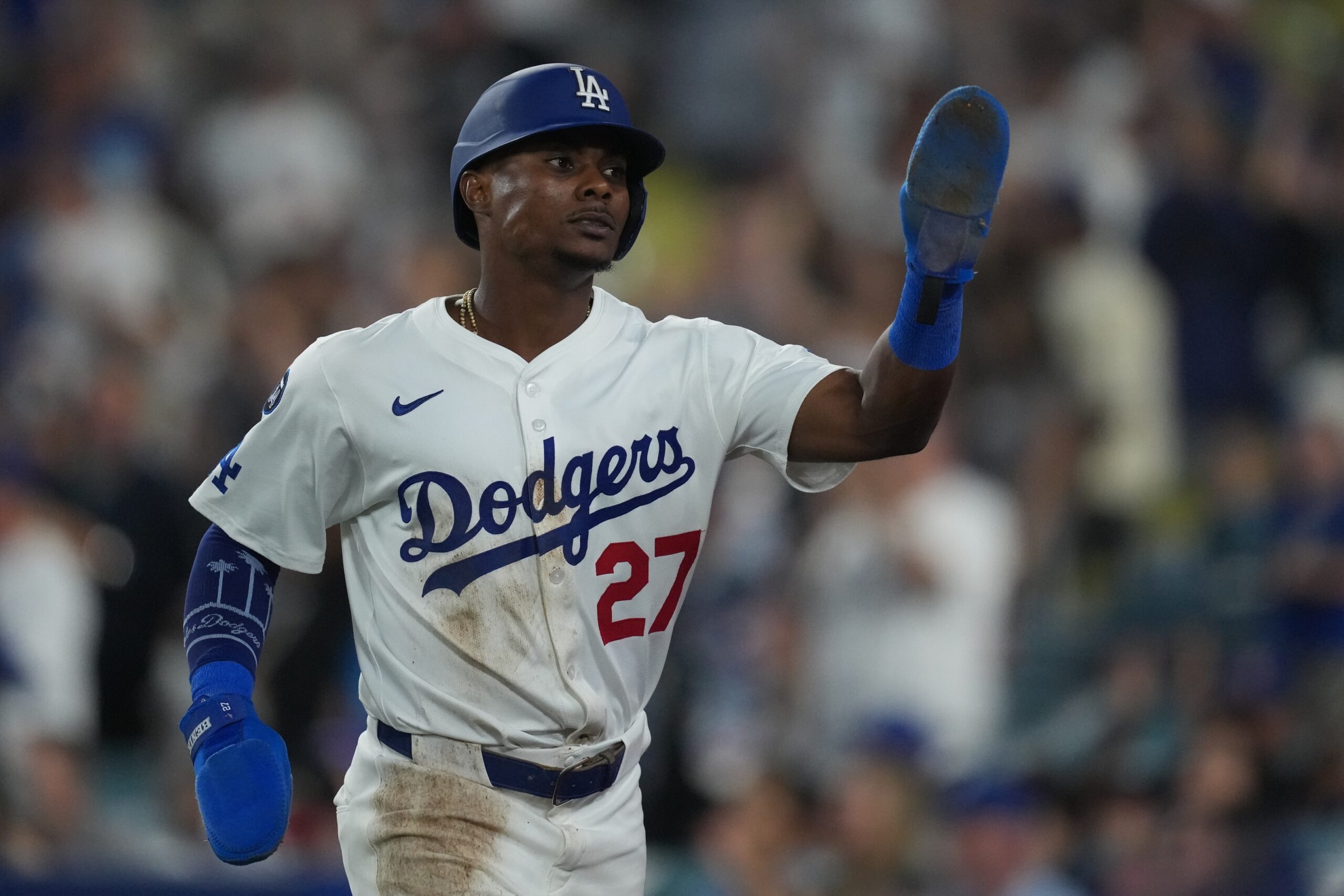
The Los Angeles Dodgers’ holiday business continued with a notable depth-for-upside move, reportedly sending outfielder Esteury Ruiz to the Miami Marlins in a trade that underscores how the reigning World Series champions plan to sustain their edge into 2026 and beyond. On the surface, it is a modest offseason deal, but the transaction fits into a larger pattern of how the Dodgers manage roster churn while still aiming for another parade.
What Does Moving Ruiz Accomplish in Dodgers-Marlins Swap?
For Los Angeles, moving Ruiz is a statement about both present fit and long-term roster math. Ruiz’s top-end tool has always been his speed, and he offers legitimate value as a pinch‑runner, late‑game defender and occasional spark‑plug starter in center field or left. However, the Dodgers’ outfield depth chart is already crowded, and they have increasingly prioritized players who offer either plus power or multi-positional flexibility in addition to speed. By flipping Ruiz while his perceived value remains solid, they convert a role player into pieces that better align with their needs for 2026.
The bigger context is the Dodgers’ roster profile after a grueling but successful 2025 campaign that ended with an 11‑inning Game 7 win over the Toronto Blue Jays in the World Series. The core of Mookie Betts, Freddie Freeman and Yoshinobu Yamamoto remains intact, but the front office has been candid about wanting to get younger and more versatile around the edges. That has meant targeting players who can cover multiple infield and outfield spots, while also stockpiling upper‑minors pitching that can survive the long slog of another title defense.
How Does Ruiz Benefit Miami?
From Miami’s perspective, Ruiz represents a classic Marlins buy-low upside play. The Marlins’ offense has needed more speed and disruption at the top or bottom of the lineup, and their ballpark profile rewards gap power and wheels more than pure slug. Ruiz does not need to be a star to pay off; if he gets on base at even a league‑average clip and continues to steal bases at a high success rate, he can dramatically alter late-game leverage situations for Miami.
The trade also reflects the different financial universes these two clubs inhabit. The Dodgers routinely live at or near the top of the payroll charts, absorbing big contracts while churning through their farm system for cheap contributors. The Marlins, conversely, have often been forced to bet on affordable skill sets such as speed and defense, hoping to flip them later or ride them to a surprise postseason push. Ruiz fits that mold perfectly, and the cost in young arms or mid-tier prospects that goes back to Los Angeles is more palatable for Miami than dipping into free agency for a comparable profile.
How Does the Move Help the Dodgers?
For Los Angeles, this move slots in alongside a broader set of winter decisions that have already reshaped the depth chart. The Dodgers’ remaining “biggest roster hole” entering the new year has been framed more as incremental pitching depth and bench versatility than a glaring everyday vacancy. Each move, including this swap, marginally increases their margin for error as they brace for the wear and tear of another 162‑game marathon plus October.
The deal also hints at how the National League may evolve over the next year. Teams like the Dodgers, Orioles and Blue Jays have been praised as early offseason “winners,” not only because of marquee additions, but due to a steady run of these secondary deals that tighten up weak spots. If LA’s pro scouting department is right about what they are getting back from Miami, this could be another subtle win for an organization that has already mastered the art of winning the margins.
Ultimately, the Ruiz trade is less about a single player and more about a franchise that refuses to stand still after climbing the mountaintop. While Miami gets a much‑needed injection of athleticism and upside, the Dodgers reallocate a surplus piece in service of a broader, long-term blueprint that has kept them at the center of the baseball universe for the better part of a decade.
Kirby Lee-Imagn Images
