

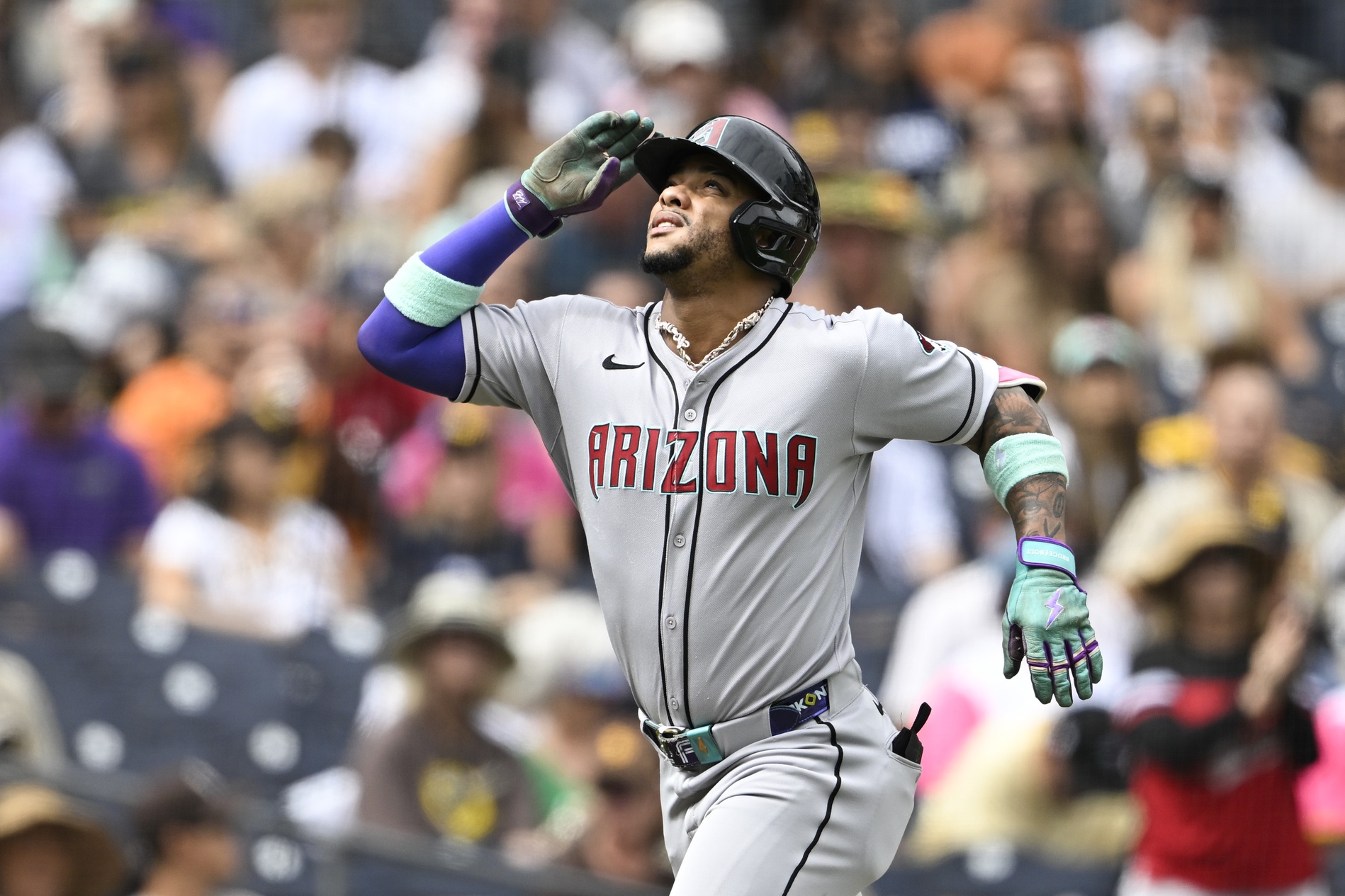
Two very different franchises, the Boston Red Sox and Arizona Diamondbacks, find themselves at the center of one of the offseason’s most delicate negotiations. The future of Ketel Marte hovers over both teams, shaping how each fan base views its club’s ambition heading into 2026.
Ketel Marte talks reach a critical point
Arizona’s general manager has indicated that discussions surrounding Marte will not “linger much longer,” a phrase that signals a looming inflection point. Either the Diamondbacks chart a path to keep him in the desert, or they pivot to a blockbuster that reshapes their roster and farm system.
For a franchise that has leaned on Marte as both on-field engine and clubhouse presence, the decision is enormously consequential. Retaining him reinforces a commitment to building around a known star rather than resetting the timeline. On the other hand, moving him would prioritize depth and long-term flexibility, but at a steep short-term cost to competitive credibility.
The clock is ticking, and that time pressure only intensifies the leverage dynamics with interested clubs.
Boston’s search for offensive answers
In Boston, the front office has already shown a willingness to get creative in reshaping its lineup. Recent trades to import controllable offense—including a notable deal for a veteran first baseman—signal a desire to close the gap in a crowded American League field.
Reports have consistently tied the Red Sox to impact bats and multi-positional players, underscoring how aggressively they are attacking their offensive shortcomings. At the same time, national insiders suggest Boston still has “another big move in them,” a hint that the front office is not finished targeting difference-makers.
A player like Marte fits the type of acquisition that could justify that kind of language.
What Ketel Marte Offers:
-
He offers switch-hitting production, positional versatility, and a track record of high-level performance when healthy.
-
His presence would immediately change both the look of the lineup and the perception of Boston’s seriousness this winter.
The Cost for the Red Sox and Diamondbacks
Whether it is Boston or another suitor, acquiring Marte will not be cheap. Arizona understands that it holds one of the few available players who can alter a contender’s trajectory in a single move.
Any serious bidder will likely be pushed to the edge of its comfort zone. Top prospects and young, controllable talent will almost certainly be the starting point of talks, not the end. The acquiring team must also weigh Marte’s contract status, health history, and long-term fit against the immediate boost he would provide.
For Boston, already reshaping its roster, such a trade would be a clear declaration that the rebuilding phase is over. Considering how strong the AL East is with the Blue Jays, Yankees and re-tooling Orioles, it will be difficult to keep up in 2026.
For Arizona, it would mark a pivot to a different kind of roster construction, one that spreads risk across multiple players rather than concentrating it in a single star.
A decision that will echo into 2026
As the offseason accelerates, the Marte situation encapsulates the broader tension of modern roster building. Teams must constantly weigh the value of present contention against the security of future flexibility, all while navigating fan expectations and financial realities.
If Arizona keeps its centerpiece, the Diamondbacks will enter 2026 with a familiar face leading the charge and a clear signal that they still believe in the current core. If Marte is moved, the fallout will shape how both franchises—and their fan bases—view this winter for years to come.
On the final day of 2025, the trade market is quieter than the chaos of the winter meetings, but the stakes feel no less significant. For the Red Sox, the Diamondbacks, and everyone watching, Ketel Marte represents more than a star player; he is a test of organizational conviction at a moment when every decision is magnified.
Denis Poroy-Imagn Images
