

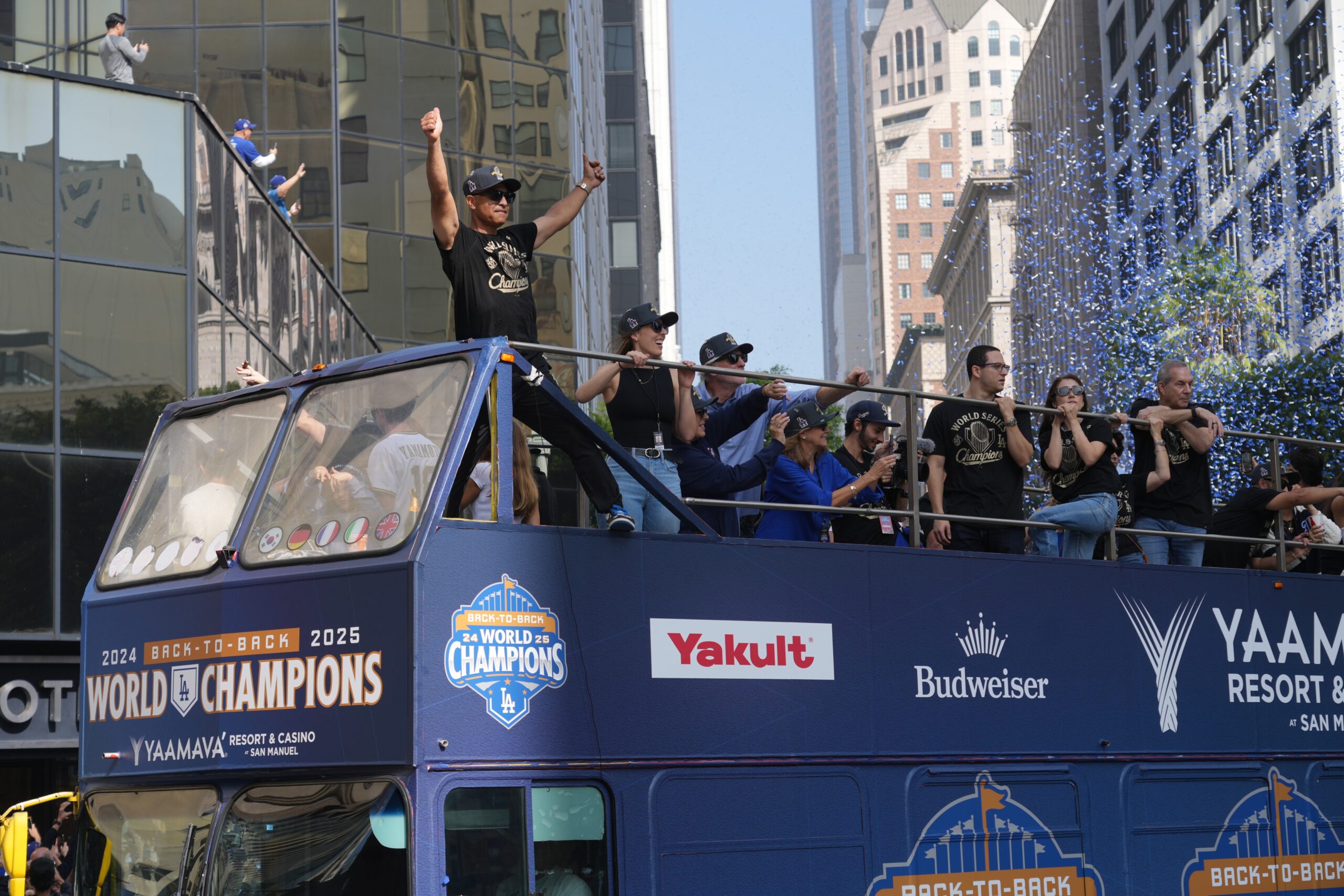
The Los Angeles Dodgers entered 2025 as baseball’s juggernaut, projected for 103-plus wins and widely expected to cruise to another pennant. Instead, they finished 10.5 games below that lofty bar, didn’t even snag a first‑round bye, and spent long stretches of the summer looking strangely mortal. Yet when the calendar flipped to October, the familiar script returned: the sport’s deepest roster caught fire, navigated a loaded National League, and finished by outlasting the upstart Toronto Blue Jays in a tense seven‑game World Series.
The Champs who “Underachieved”: Undeserving?
On paper, that combination—disappointing regular season, ultimate trophy—sounds contradictory, but it perfectly captures the paradox of the modern Dodgers. This is a franchise built to survive turbulence: when stars slump or the rotation springs leaks, layers of depth and relentless organizational competence keep the floor high. In 2025, that depth was tested more than usual, and the margin for error shrank.
Falling short of expectations
The regular‑season math tells the story. The Dodgers’ 93 wins would be a dream season in most markets, but relative to their 103.5 preseason total, it registers as a 10.5‑win underperformance. That gap reflects a few key issues: uneven starting pitching, stretches of offensive inconsistency, and the simple reality that the league has spent the last half‑decade trying to build rosters specifically to beat Los Angeles in October.
For months, it felt like the Dodgers were more “contender among many” than inevitable superteam. The Milwaukee Brewers posted the best record in baseball, the Miami Marlins and Toronto Blue Jays blew past expectations, and even clubs like Seattle and Detroit flashed genuine contender profiles. In that context, Los Angeles suddenly looked more beatable, more reliant on late‑inning magic and matchup mastery than on brute‑force dominance.
October reminder: Champs are champs
Once the postseason started, the Dodgers leaned into what still separates them from most of the league. Their lineup remained relentlessly deep, they could roll wave after wave of power arms, and their experience navigating high‑leverage playoff moments again proved decisive. Most crucially, the club’s performance spiked when the stakes were highest, erasing the memory of a regular season that felt more like a grind than a coronation.
The NLCS was the one series that exposed their warts, even in victory. Milwaukee, who had the best record in baseball, never truly pushed them to the brink, but the Brewers’ ability to run out premium pitching in almost every game showed how small the margins can be. Still, in a bracket where Atlanta cratered, New York’s big‑market experiment faltered, and surprise teams like Miami fell just short of October, the Dodgers’ stability and star power carried the day.
The Edwin Díaz “trumpets” and a looming three‑peat
As soon as the parade confetti settled, Los Angeles made one of the offseason’s loudest moves: signing elite closer Edwin Díaz, a move so dramatic it drew “trumpets” headlines in grading columns. After multiple postseasons in which ninth‑inning certainty seemed like the one thing they lacked, the Dodgers now have a proven game‑ender to pair with their existing bullpen weapons.
The implications are obvious. With Díaz in house, the Dodgers can shorten games, protect slim leads more reliably, and better align high‑leverage roles throughout the postseason. For a team already being discussed in terms of a potential three‑peat, that move signals that complacency is not on the menu. Even if the regular‑season win column again falls short of betting‑market expectations, Los Angeles has built a roster calibrated not for style points but for rings.
Imperfect dominance in the new MLB landscape
The 2025 Dodgers became a case study in how dominance looks different in a league that has flattened around the edges. Superteams can still exist, but they are more vulnerable, more prone to being dragged into the muck of a long season and exposed by improved competition and variance. What set Los Angeles apart this year was not flawless performance but the ability to stay standing when everyone else fell away.
For Discover readers, the hook is simple: the Dodgers proved that modern dynasties don’t have to be wire‑to‑wire juggernauts. They only have to be the last team standing in October, and in 2025, an “underachieving” 93‑win club ended the year right where preseason projections said it would—hoisting a trophy and plotting the next run.
