

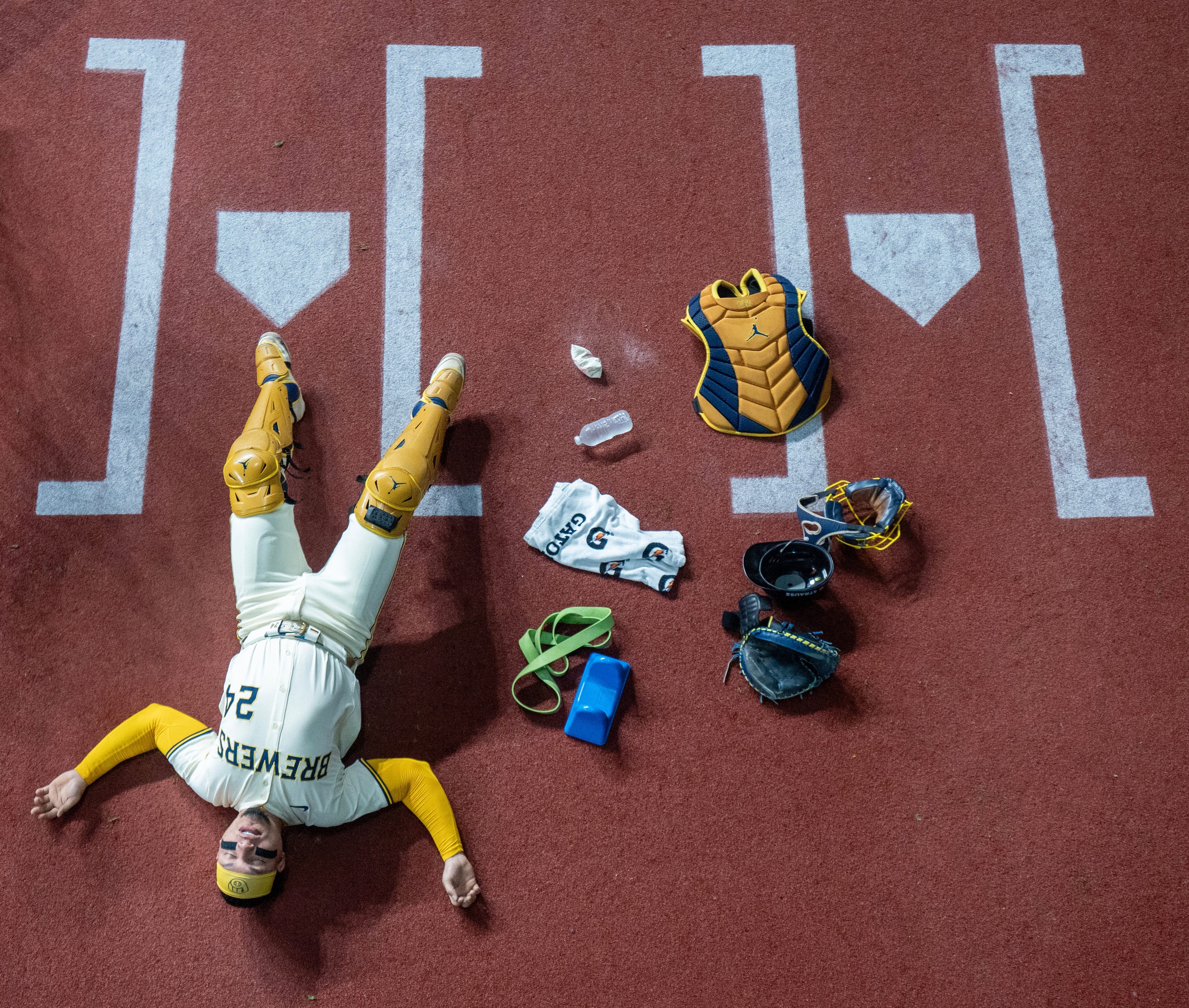
No team embodied the split personality of this season more than the 2025 Milwaukee Brewers. Over 162 games, they were a machine, posting the best record in baseball and beating their preseason win total by a robust 13.5 games. They did it despite losing one of their most important players, shortstop Willy Adames, in free agency, leaning on depth, pitching, and a quietly dangerous lineup to dominate the National League Central.
That regular‑season run earned them an A‑minus in year‑end franchise grades, a mark buoyed primarily by their April‑to‑September excellence. In another year, such a record might have made the Brewers the story of the league. Instead, their October flameout and muted offseason have turned them into something more complicated: a contender with both genuine accomplishments and nagging unanswered questions.
2025 Milwaukee Brewers and NLCS Disappointment vs Dodgers
Despite their gaudy record, Milwaukee’s postseason ended with a thud. The Brewers reached the NLCS but never truly mounted a serious challenge to the World Series-bound Los Angeles Dodgers, failing to “put up a fight” in a series that underscored the difference between piling up regular‑season wins and navigating baseball’s sharpest playoff edges. For a fan base used to October frustration, this year’s exit stung precisely because it felt so preventable.
The matchup exposed the kind of thin margins that decide playoff series. The Dodgers’ ability to lengthen games with elite bullpen arms and big‑inning offense left Milwaukee perpetually playing from behind, unable to flip the series with one pitching‑driven domination. In retrospect, it feels like the moment when the Brewers’ roster went from “incredible over 162” to “maybe one or two impact pieces short” when facing the league’s gold standard.
A 2026 offseason that cooled the buzz
The harshest part of Milwaukee’s report card isn’t about the season that was; it’s about the months that followed. Instead of celebrating their best regular season in franchise history by doubling down with aggressive additions, the Brewers’ winter has been most notable for giving Brandon Woodruff a hefty raise and making a trade—Angel Zerpa for Isaac Collins and Nick Mears—that drew mixed reviews. In grading terms, that combination turned what might have been an A season into that A‑minus.
The optics matter. After watching their team post the best record in baseball, Brewers fans reasonably expected a “we’re one move away” offseason. What they’ve gotten so far feels more like a holding pattern, with the risk that regression, internal variance, and league‑wide improvements close the gap before Milwaukee gets another perfect alignment of health and performance.
What needs to happen in 2026
For Milwaukee to convert 2025’s success into a true contention window, a few priorities stand out. First, the front office needs to treat the current core as something to be maximized, not merely preserved. The combination of top‑end pitching, a competent lineup, and a now‑proven regular‑season formula gives the club a platform, but October tends to reward teams that can add one or two matchup‑breaking weapons.
Second, the organization must decide whether incremental upgrades are enough in a National League landscape where the Dodgers reload annually and upstart clubs like Miami and Cincinnati are closing the gap. A “run it back and hope for better variance” strategy might work once, but it rarely sustains windows. Targeted upgrades—especially in high‑leverage bullpen spots or impact bats—could be the difference between another NLCS cameo and a genuine World Series run.
A small‑market powerhouse at a crossroads
Milwaukee’s story plays well on the national stage because it challenges common assumptions about small‑market ceilings. The Brewers proved they can build a 100‑plus‑win juggernaut; the question now is whether they can finish the job. In a league where the Dodgers and Yankees dominate headlines, the next step—either a bold trade, a key free‑agent splash, or a breakout star—could push Milwaukee from admirable overachiever to true national storyline.
Until then, the 2025 Brewers remain a paradox: the team that did almost everything right from April through September, only to leave fans with the nagging sense that the most important work still lies ahead. That tension—between satisfaction and unfinished business—is exactly what will keep their name circulating as the 2026 season approaches.
